Designing a commercial space is more than just constructing walls and adding storefronts—it’s about creating an environment that attracts customers, supports business operations, and maximizes functionality. Commercial Building Design plays a crucial role in shaping retail stores, shopping complexes, and malls that offer seamless navigation, visual appeal, and a strong customer experience.
Well-planned architecture ensures efficient movement, logical layouts, attractive exteriors, and strategic space utilization—key factors that decide the success of any retail or commercial establishment.
Why Commercial Building Design Matters in Retail Spaces
Retail spaces rely heavily on thoughtful planning. Good commercial architecture influences customer behavior, walking patterns, purchasing decisions, and brand perception.
1. Enhances Customer Experience
A well-structured layout ensures easy navigation, attractive display areas, and visually engaging elements. Customers tend to spend more time in spaces that are comfortable and easy to move through.
2. Supports Business Functionality
Retail businesses require defined zones for storage, display, billing, customer service, and staff activities. Proper commercial building design ensures all these spaces are well-distributed and efficient.
3. Improves Safety and Accessibility
Modern commercial architecture focuses on accessibility, including wide pathways, elevators, proper signage, and escape routes—ensuring compliance and customer safety.
Key Elements of Architecture Planning for Shopping Complexes
Designing a shopping complex or retail center requires deeper planning to ensure that the structure serves diverse retailers and large foot traffic.
1. Strategic Site Planning
Location, footfall direction, sunlight, and road connectivity influence the building’s layout. The planning process begins with analyzing the site and placing entry/exit points strategically.
2. Functional Zoning
Every retail complex needs distinct zones:
Anchor stores
Food courts
Entertainment areas
Parking spaces
Retail kiosks
Service corridors
Proper zoning helps maintain a smooth customer flow and maximizes business potential for retailers.
3. Efficient Circulation Planning
Wide corridors, escalator placement, staircases, and elevators play a vital role in managing crowd movement. Good circulation planning prevents congestion and enhances customer comfort.
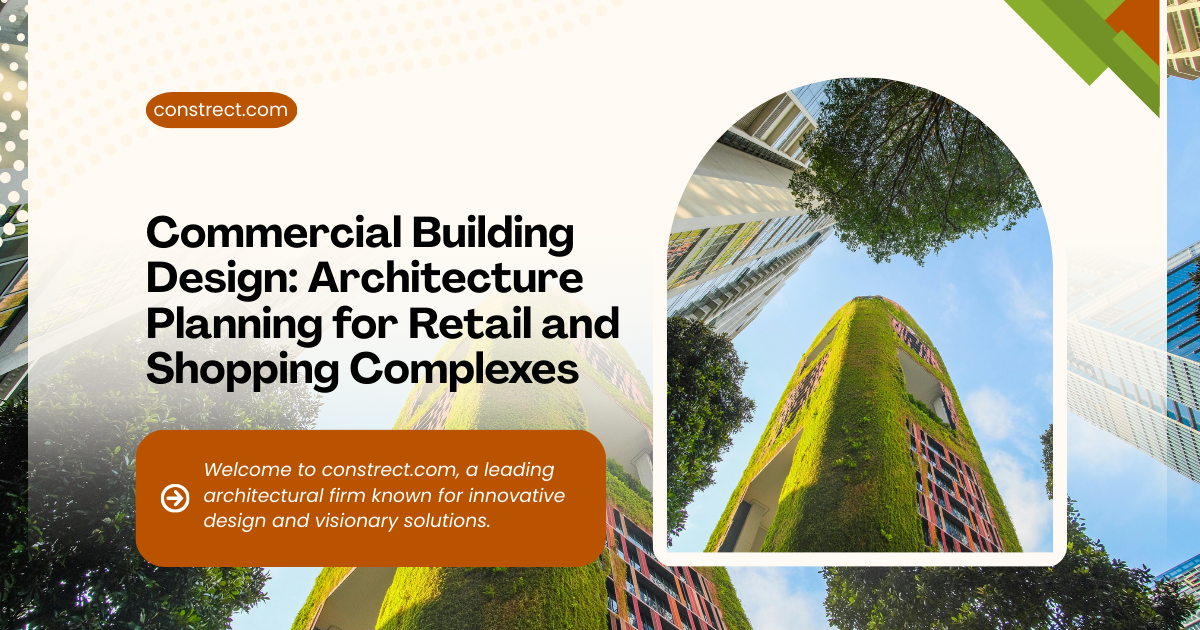
4. Aesthetic and Façade Design
Exterior design significantly affects customer impressions. Modern commercial building design incorporates:
Glass facades
Metal cladding
Lighting elements
Signage integration
Contemporary architectural styles
A strong façade boosts the commercial value and creates brand identity.
5. Energy-Efficient and Sustainable Features
Today’s commercial architecture prioritizes sustainability. Features include:
Natural lighting
Solar panels
Energy-efficient HVAC systems
Eco-friendly building materials
Such additions reduce operational costs and support a green building environment.
6. Parking and Traffic Management
Retail complexes require adequate parking to manage large crowds. Smart parking layouts and smooth vehicle circulation improve convenience and reduce wait times.
7. Safety, Security, and Compliance
Fire safety systems, emergency exits, CCTV planning, and structural stability are essential parts of commercial architecture planning.
Benefits of Well-Planned Commercial Building Design
A thoughtful design approach offers long-term advantages:
Enhanced customer satisfaction
Increased retail sales
Higher property value
Improved energy performance
Streamlined business operations
Conclusion
Commercial Building Design plays a transformative role in shaping retail stores and shopping complexes. With strategic architecture planning, businesses can offer better customer experiences, enhance functionality, and create long-lasting commercial value.
At Constrect, we specialize in designing commercial spaces that balance aesthetics, performance, and business success. Whether it’s a retail store, shopping complex, or mixed-use building, our architecture planning ensures every space works efficiently and beautifully.